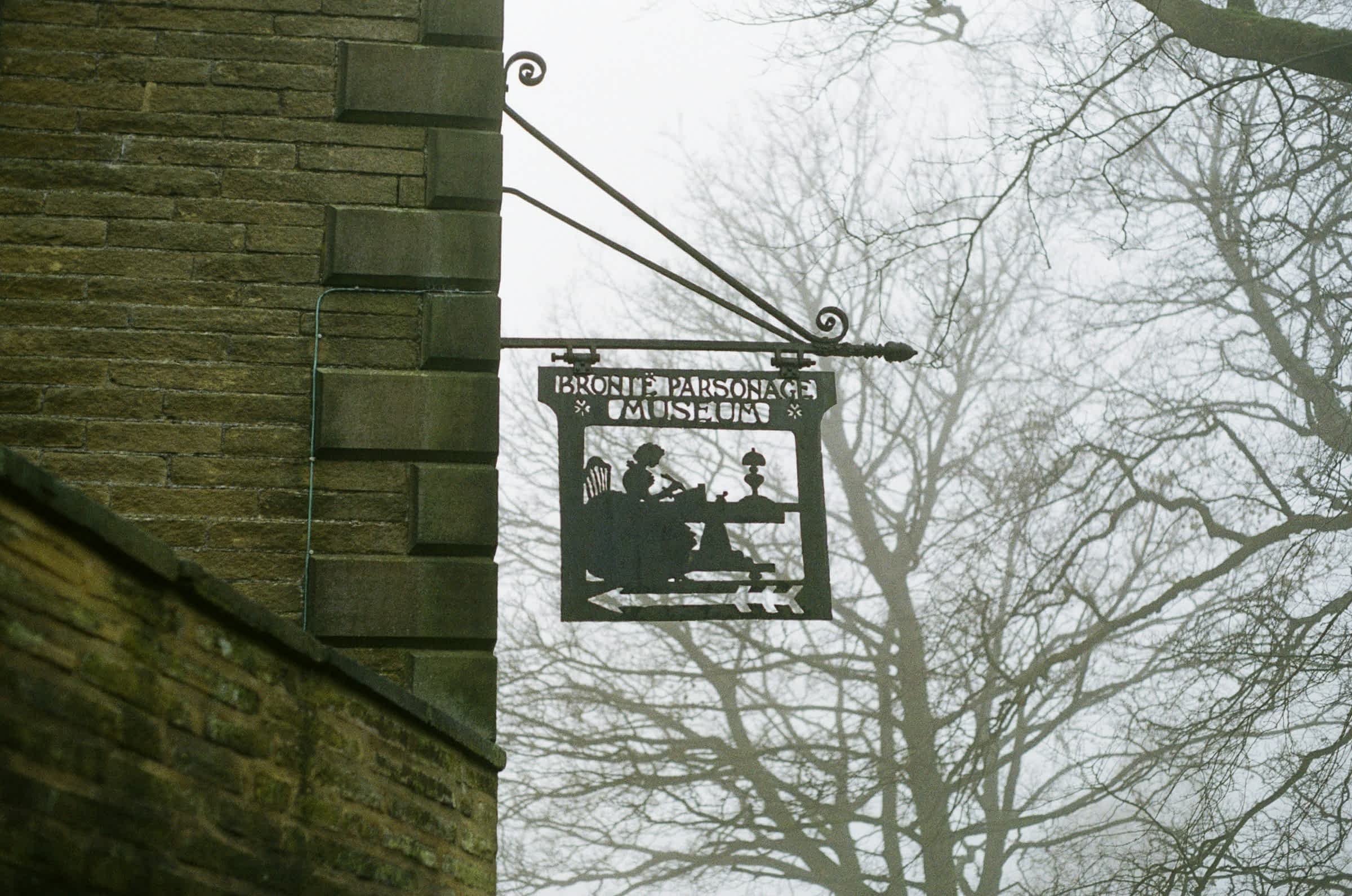
This Brontë timeline highlights key events in the lives of sisters Charlotte, Emily, and Anne, their brother Branwell, and their parents, Patrick and Maria, along with their aunt, Elizabeth Branwell who cared for them after their mother’s death.
Key moments in their lives and literary careers are captured in this Brontë chronology, showcasing how these experiences shaped their remarkable contributions to literature.
Much credit goes to the now-defunct Haworth-Village website, where much of this timeline was first published.
The Beginning of the Brontë Family
02/12/1776 – Elizabeth Branwell was born at Penzance in Cornwall, elder sister of Maria Branwell. She brought up the Brontë children after their mother, Maria Branwell (Brontë), died.
17/03/1777 – Patrick Brontë was born at Emdale, Drumballyroney, County Down, Ireland.
15/04/1783 – Maria Branwell was born at Penzance, Cornwall.
01/10/1802 – Patrick Brontë, aged 25, registered as a student at St John’s College, Cambridge.
03/10/1802 – Patrick Brontë, a student at St John’s College, Cambridge, changed the spelling of his name from Brunty to Brontë.
23/04/1806 – Patrick Brontë was awarded a Bachelor of Arts degree.
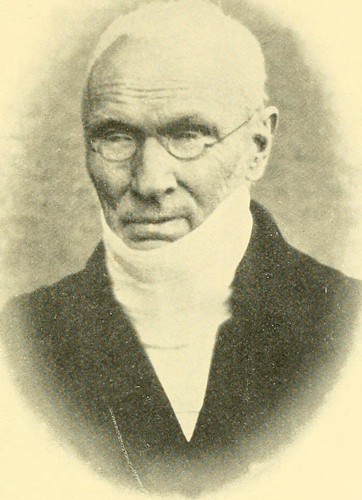
01/01/1809 – Patrick Brontë conducted his last parish duty at St Mary Magdalene Church of Wethersfield in Essex, performing a burial. He had taken the post of curate in the autumn of 1806.
05/12/1809 – Patrick Brontë began his curacy at Dewsbury.
29/09/1810 – Elizabeth Gaskell, who wrote “The Life of Charlotte Brontë”, was born.
29/12/1812 – Patrick Brontë and Maria Branwell were married at Guiseley Church.
Birth of the ‘Three Sisters’
23/04/1814 – Maria Brontë, the first child of the Brontë family, was baptised at Hartshead.
08/02/1815 – Elizabeth Brontë, second child of the Brontë family, was born at Hartshead.
19/05/1815 – The Brontë family moved to the Parsonage at Market Street, Thornton, Bradford.

26/08/1815 – Elizabeth Brontë, the second child of the Brontë family, was baptised at Thornton.
21/04/1816 – Charlotte Brontë, the third child of the Brontë family, was born at Thornton.
29/06/1816 – Charlotte Brontë, the third child of the Brontë family, was baptised at Thornton.
26/02/1817 – Mary Taylor, a close friend of Charlotte Brontë, was born.
26/06/1817 – Patrick Branwell Brontë, the fourth child of the Brontë family, was born at Thornton.
30/07/1818 – Emily Jane Brontë, the fifth child of the Brontë family, was born at Thornton.
20/08/1818 – Emily Jane Brontë, the fifth child of the Brontë family, was baptised.
06/01/1819 – Arthur Bell Nicholls was born in Killhead, County Antrim, Ireland. He would later become Charlotte Brontë’s husband.
19/11/1819 – The resignation of the Rev. Samuel Redhead from the Perpetual Curacy of Haworth was officially recorded by the Bradford Parish Clerk. Redhead had the shortest tenure, lasting just three weeks due to local outrage that he was appointed without consulting the Trustees. Elizabeth Gaskell wrote that during one service, a man rode into the church on an ass with his face turned towards the tail and a pile of old hats on his head, causing such uproar that Redhead could not continue.
17/01/1820 – Anne Brontë, the sixth child of the Brontë family, was born at Thornton.
The Brontës Arrive in Haworth
25/02/1820 – Patrick Brontë was granted perpetual curacy of Haworth.
25/03/1820 – Anne Brontë, the sixth child of the Brontë family, was baptised at Thornton.
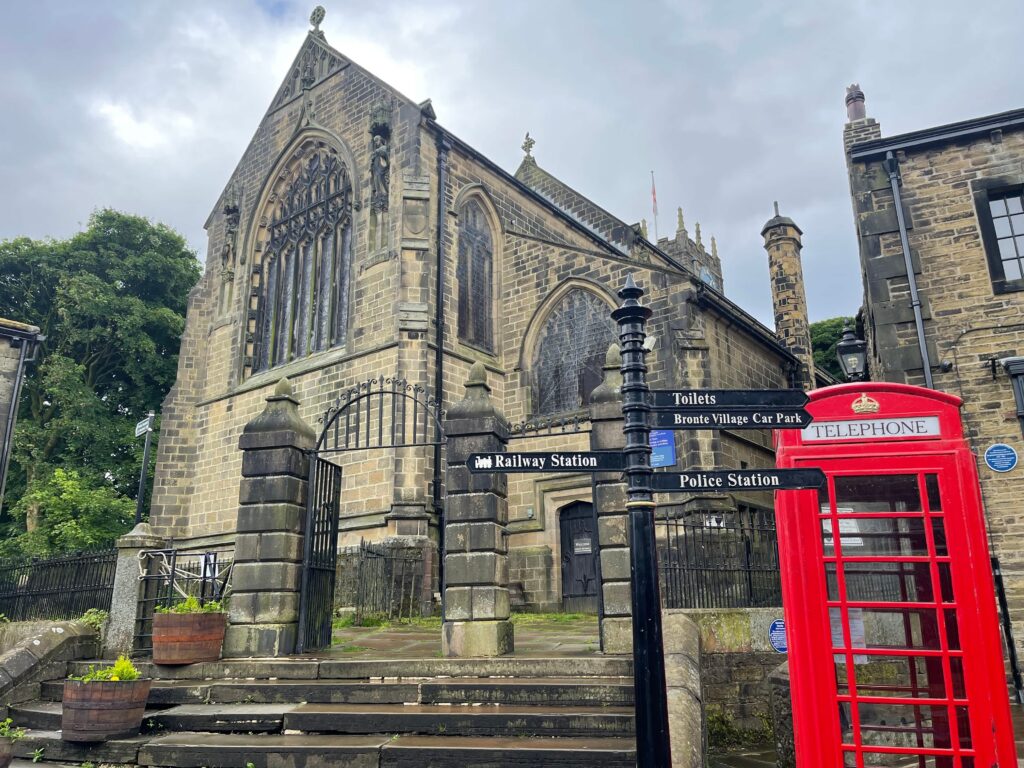
20/04/1820 – The Brontë family moved from Thornton to Haworth Parsonage. The procession of seven carts and one covered wagon travelled up Main Street (then known as Kirkgate), ending at Parsonage Lane (now Church Street).

21/01/1821 – Maria Brontë, wife of Patrick Brontë, was diagnosed with cancer.
15/09/1821 – Maria Brontë, wife of Patrick Brontë, died at Haworth, aged 38.
22/09/1821 – Maria Brontë, wife of Patrick Brontë, was buried in the family vault at Haworth Parish Church.
27/11/1821 – Patrick Brontë wrote of his wife’s illness and death, recalling that during more than seven months he expected her final removal and was left alone with six young children, the nurse and servants.
21/04/1823 – Patrick Brontë wrote to Mary Burder’s mother in Wethersfield, Essex, explaining the past 14 years of his life and inquiring about her family. His wife had died in 1821, and he was struggling to cope alone with his six young children.
21/07/1824 – The eldest Brontë girls, Maria and Elizabeth, were sent to the Clergy Daughters’ School at Cowan Bridge.
10/08/1824 – Charlotte Brontë was sent to the Clergy Daughters’ School at Cowan Bridge.
25/11/1824 – Emily Brontë was sent to the Clergy Daughters’ School at Cowan Bridge.
06/05/1825 – Maria Brontë, the first child of the Brontë family, died at Haworth of consumption at age 12.
01/06/1825 – The Brontë sisters left the Clergy Daughters’ School at Cowan Bridge, where conditions were described as disgusting and filthy.
15/06/1825 – Elizabeth Brontë died at Haworth, aged 10.
18/06/1825 – Elizabeth Brontë, aged 10, was buried at Haworth.
25/07/1825 – Timothy Feather was baptised by Patrick Brontë. He later became known as the last handloom weaver and lived all his life in Stanbury.
05/07/1826 – Patrick Brontë returned from Leeds and gave a box of toy soldiers to Branwell.
22/04/1828 – Martha Brown, who later became a servant to the Brontë household, was born.
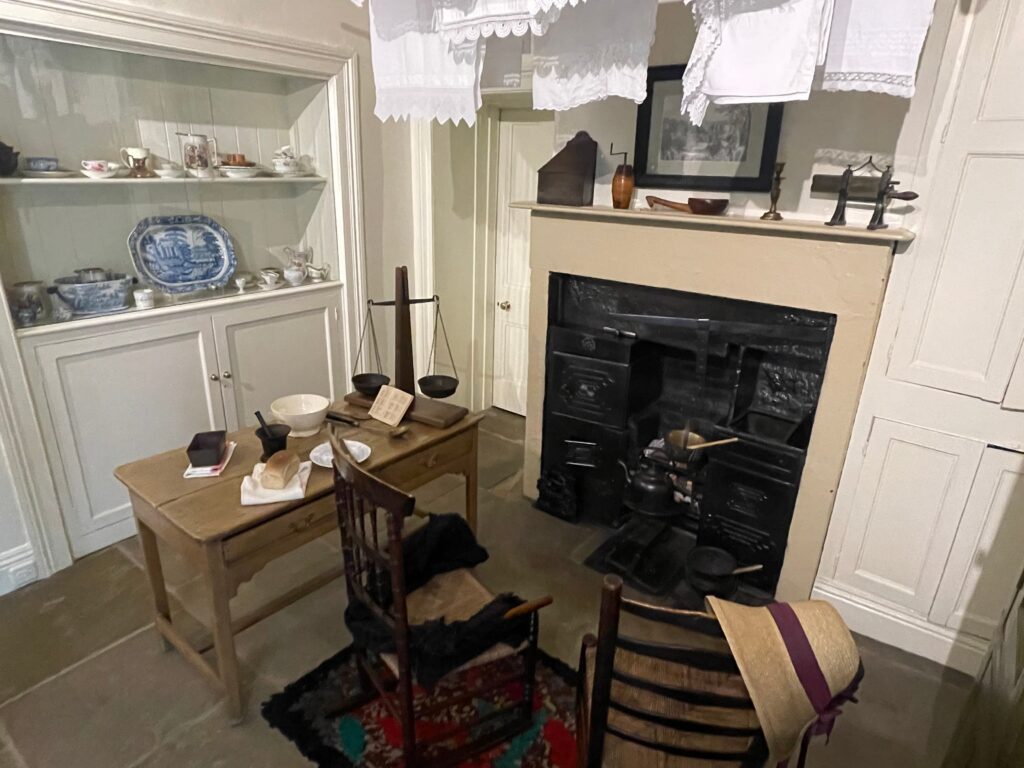
12/03/1829 – Charlotte Brontë wrote in “The History of the Year” that she was in the kitchen at Haworth Parsonage, describing Tabby the servant washing up, Anne watching cakes, Emily brushing the parlour, Papa and Branwell gone to Keighley, their aunt upstairs, and herself writing at the table.
13/07/1830 – A watercolour still life of wild roses was painted by Charlotte Brontë “from nature”.
22/08/1830 – Charlotte Brontë wrote her poem “Morning”.
30/04/1833 – Aunt Branwell, who raised the Brontë children, made her will. The money helped finance the early publications of Charlotte, Emily, and Anne.
24/11/1834 – Emily Brontë wrote of feeding animals, Branwell bringing news of Sir Robert Peel, and helping peel apples for Charlotte to make a pudding, noting Tabby’s dialect as she called Anne “pillopatate”.
29/07/1835 – Charlotte Brontë went as a teacher to Miss Wooler’s school at Roe Head. Emily accompanied her as a pupil.
01/02/1836 – Branwell Brontë was proposed as a Freemason.
29/02/1836 – Branwell Brontë became a full member of the Three Graces Lodge in Haworth.
22/02/1837 – A meeting was held in the Sunday School rooms, chaired by Patrick Brontë, to repeal the Poor Law Amendment Act of 1834.
12/03/1837 – Charlotte Brontë received a letter from Robert Southey, the Poet Laureate, telling her that literature could not be the business of a woman’s life.
07/08/1837 – Emily Brontë wrote her poem “O God of Heaven! The dream of horror”.
14/05/1838 – Branwell Brontë wrote his poem “At dead of midnight drearily”.
04/12/1838 – Emily Brontë wrote the poem beginning “A little while, a little while, The noisy crowd are barred away…”.
18/12/1838 – Emily Brontë wrote her poem “The Bluebell”.
12/01/1839 – Emily Brontë wrote the poem “The night was dark yet winter breathed….”.
26/03/1839 – Charlotte Brontë wrote her poem “Life”.
08/04/1839 – Anne Brontë became governess for the Ingham family at Blake Hall, Mirfield.
12/07/1839 – Emily Brontë wrote her poem “And now the house-dog stretched once more”.
30/09/1839 – Emily Brontë wrote the poem “The organ swells the trumpets sound”.
14/11/1839 – Emily Brontë wrote the poem beginning “Well, some may hate, and some may scorn…”.
06/01/1840 – Emily Brontë wrote the poem beginning “Thy son is near meridian height, and my sun sinks in endless night…”.
14/02/1840 – William Weightman, Patrick Brontë’s curate, sent Valentines to the three Brontë sisters, the first they had ever received.
31/08/1840 – Branwell Brontë was appointed Assistant Clerk at Sowerby Bridge Railway Station near Halifax with a salary of £75 a year.
01/03/1841 – Emily Brontë wrote her poem “Riches I hold in light esteem and Love I laugh to scorn…”.
02/03/1841 – Charlotte Brontë became a governess for the White family at Upperwood House, Rawdon, near Bradford.
01/04/1841 – Branwell Brontë was employed as Clerk in Charge of Luddenden Foot station near Hebden Bridge. While there he was known to frequent the Lord Nelson Tavern.
16/07/1841 – Emily Brontë wrote her poem “Aye, there it is! It wakes tonight”.
12/12/1841 – Charlotte Brontë wrote her poem “Passion”.
08/02/1842 – Charlotte and Emily Brontë began their journey to Brussels to stay at the Pensionnat Heger, a finishing school run by the Heger family. Patrick Brontë travelled with them.
31/03/1842 – Branwell Brontë was dismissed from his post as Clerk in Charge of Luddenden Foot station near Hebden Bridge. A deficit in the accounts was attributed to his incompetence rather than theft.
14/08/1842 – William Weightman, Patrick Brontë’s curate, performed his last duty at Haworth. He had been visiting the sick and later died of cholera.
06/09/1842 – William Weightman, aged 26, died of cholera. An inscription records his zeal and the affection of the congregation and Sunday School.
10/09/1842 – William Weightman was buried. He had died of cholera on 6 September.
02/10/1842 – A memorial service was held by Patrick Brontë in memory of William Weightman, whom he had loved as a son.
29/10/1842 – Elizabeth Branwell, aunt to the Brontë children who brought them up, died aged 66.
03/11/1842 – Elizabeth Branwell was buried at Haworth.
10/11/1842 – Anne Brontë wrote her poem “To Cowper”.
26/12/1842 – Branwell Brontë attended his last meeting as a Mason of the Three Graces Lodge in Haworth.
30/03/1843 – Branwell Brontë wrote his poem “Thorpe Green”.
04/08/1843 – Charlotte Brontë’s tutor M. Heger presented her with a wood fragment from Napoleon’s coffin.
04/10/1843 – Patrick Brontë wrote to the church trustees about gossip in Haworth that a lotion he used for his eyesight smelled like alcohol.
31/10/1843 – Anne Brontë wrote her poem “The Captive Dove”.
29/12/1843 – Charlotte Brontë received a Diploma from the Pensionnat at Brussels.
01/01/1844 – Charlotte Brontë left the Pensionnat at Brussels for home.
03/01/1844 – Charlotte Brontë arrived back at Haworth Parsonage from Brussels.
11/03/1844 – Emily Brontë wrote her poem “The Wanderer from the Fold”.
01/05/1844 – Emily Brontë wrote a poem beginning “The linnet in the rocky dells, The moor-lark in the air…”.
18/01/1845 – Anne and Branwell Brontë returned to their employment as tutors for the Robinson family at Thorp Green.
03/02/1845 – Emily Brontë wrote her poem “The Philosopher”.
03/03/1845 – Emily Brontë wrote her poem “Remembrance”.
10/04/1845 – Emily Brontë wrote her poem “Death”.
14/04/1845 – Emily Brontë wrote the poem “Stars”, beginning “All through the night, your glorious eyes were gazing down in mine”.
18/05/1845 – The Reverend Arthur Bell Nicholls, aged 26, was appointed Curate at Haworth with a salary of £100 per annum. He later married Charlotte Brontë.
20/05/1845 – Anne Brontë wrote her poem “If this be all”.
18/06/1845 – Branwell Brontë returned to his employment as tutor with the Robinson family at Thorp Green. While there he had an affair with Mrs Robinson.
17/07/1845 – Branwell Brontë was dismissed from his post as tutor for the Robinson family at Thorp Green after the affair was discovered.
02/01/1846 – Emily Brontë wrote her poem “No coward soul is mine, No trembler in the world’s storm-troubled sphere…”.
06/02/1846 – Charlotte Brontë sent a manuscript of poems to Aylott and Jones. She and her sisters used the pseudonyms Acton, Currer and Ellis Bell.
06/04/1846 – Charlotte Brontë wrote to the publishers about a work of fiction in three distinct tales, to be published together or separately under the Bell pseudonyms.
09/04/1846 – Branwell Brontë placed an advert in the Halifax Guardian for a post that would take him abroad.
07/05/1846 – The first printed copies of “Poems” by Currer, Ellis and Acton Bell arrived at the Parsonage.
26/05/1846 – Mrs Robinson’s husband died. News of his death gave Branwell hope of marriage.
04/07/1846 – The Brontë poems under the Bell pseudonyms received favourable criticism, but only two copies were sold.
26/08/1846 – Surgeons operated on Patrick Brontë’s cataracts in Manchester. The operation was successful.
14/09/1846 – Emily Brontë wrote the poem “Why ask to know the date – the clime?”.
13/12/1846 – Through heavy drinking, Branwell Brontë incurred debts. Officers demanded payment or prison, and the family had to bail him out.
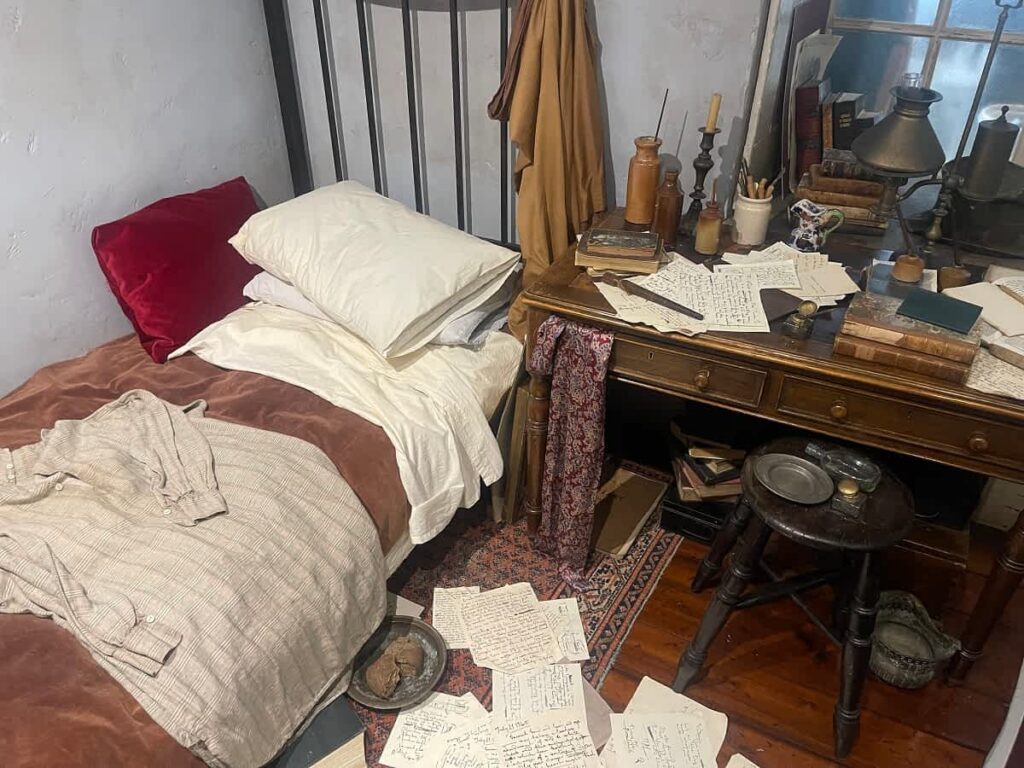
15/12/1846 – Charlotte Brontë wrote of dreadful cold, saying England felt as though it had slid into the Arctic Zone.
25/12/1846 – Anne Brontë’s poem “Music on Christmas Morning” was published in the 1846 collection “Poems” by Currer, Ellis and Acton Bell under her pseudonym.
04/07/1847 – The manuscripts of Emily Brontë’s “Wuthering Heights” and Anne’s “Agnes Grey” were sent to the publishers T. C. Newby. They were published in December 1847.
15/07/1847 – Charlotte Brontë sent the manuscript of “The Professor” to Smith, Elder and Co. It was not published at that time.
24/08/1847 – Charlotte Brontë’s manuscript of “Jane Eyre” was sent to Smith, Elder and Co.
16/10/1847 – “Jane Eyre” was published under the pseudonym Currer Bell.
19/10/1847 – Charlotte Brontë received copies of “Jane Eyre”.
10/12/1847 – Charlotte Brontë received payment for “Jane Eyre”.
14/12/1847 – Emily and Anne received copies of “Wuthering Heights” and “Agnes Grey”.
08/07/1848 – Charlotte and Anne Brontë visited London to meet their publisher and revealed their true identities, having previously used pseudonyms.
22/07/1848 – Anne Brontë finished the preface to the second edition of “The Tenant of Wildfell Hall”.
28/09/1848 – Branwell Brontë was buried in the family vault at Haworth Parish Church. He had died on 24 September, aged 31.
16/11/1848 – Emily Brontë’s health was poor. Charlotte wrote of Emily’s difficulty breathing and chest pains.
19/12/1848 – Emily Brontë died at 2 o’clock in the afternoon, aged 30.
22/12/1848 – Emily Brontë was buried in the family vault at Haworth Parish Church.

05/01/1849 – Anne Brontë caught influenza; consumption was diagnosed in both lungs.
24/05/1849 – Charlotte and Anne Brontë went to Scarborough with Ellen Nussey as Anne’s health declined.
28/05/1849 – Anne Brontë died at 2 o’clock in the afternoon, aged 29, at Scarborough.
30/05/1849 – Anne Brontë was buried at St Mary’s Churchyard, Castle Hill, Scarborough.
28/08/1849 – Patrick Brontë raised concerns about the lack of fresh water in Haworth and petitioned the General Board of Health in London.
29/08/1849 – Charlotte Brontë completed her novel “Shirley”.
09/10/1849 – Patrick Brontë sent a second petition to the General Board of Health about poor sanitation in Haworth.
26/10/1849 – “Shirley” was published under the pseudonym Currer Bell.
05/02/1850 – Patrick Brontë wrote again to the General Board of Health asking them to survey Haworth’s water supply.
02/04/1850 – Benjamin Herschel Babbage travelled to Haworth to examine the village’s sanitary condition.
04/04/1850 – Babbage opened his investigation on Haworth’s water supply. His report found poor sanitation, with open sewers on Main Street and water leaching from the graveyard into drinking water.
27/04/1850 – Patrick Brontë wrote about concerns over a path leading through the church lands to the mill.
22/05/1850 – Charlotte Brontë wrote of her dead sister Emily, describing how every part of the moors reminded her of Emily’s particular love for them.
09/06/1850 – Charlotte Brontë met the Duke of Wellington at the Chapel Royal, London.
13/06/1850 – Charlotte Brontë sat for her portrait, drawn by the artist George Redmond.
09/06/1851 – Charlotte Brontë wrote to her father about visiting the Great Exhibition, describing the Crystal Palace as a vast and wonderful place filled with all products of human industry.
08/09/1851 – Patrick Brontë wrote again to the General Board of Health, criticising delays in applying sanitary regulations to Haworth.
29/03/1852 – Charlotte Brontë completed the first draft of her novel “Villette”.
23/05/1852 – Charlotte Brontë visited Filey, stayed where she had after Anne’s death, and visited Anne’s grave, noting errors on the gravestone.
13/12/1852 – Arthur Bell Nicholls proposed to Charlotte Brontë. She informed her father, who disapproved, and she wrote to Nicholls rejecting him.
28/01/1853 – “Villette” was published.
31/01/1853 – Patrick Brontë wrote a reference for Nicholls to the Society for the Propagation of the Gospel, praising his conduct as curate. Nicholls had applied to be a missionary after Charlotte rejected his proposal.
23/02/1853 – Nicholls wrote to the Society enquiring about his missionary application.
25/05/1853 – Nicholls was presented with a pocket watch inscribed from the teachers, scholars and congregation of St Michael’s, Haworth.
19/09/1853 – Elizabeth Gaskell visited Charlotte Brontë at Haworth to discuss a biography.
11/04/1854 – Arthur Bell Nicholls proposed to Charlotte Brontë again, and she accepted.
28/04/1854 – Patrick Brontë wrote a testimonial for William Brown, asserting his competence as sexton.
29/06/1854 – Charlotte Brontë and Arthur Bell Nicholls were married at Haworth Church at 8.00 am.
01/08/1854 – Charlotte Brontë and Arthur Bell Nicholls returned to Haworth from their honeymoon in Ireland.
29/11/1854 – Charlotte Brontë and her husband walked to what is now known as the Brontë Waterfalls, where she wished to see the water in full torrent.

30/01/1855 – Charlotte Brontë was examined by Dr McTurk and was found to be pregnant.
17/02/1855 – Tabitha “Tabby” Ackroyd, faithful servant of the Brontë family, died aged 85.
21/02/1855 – Tabby Ackroyd was buried at Haworth.
31/03/1855 – Charlotte Brontë died at Haworth at the age of 38.
04/04/1855 – Charlotte Brontë was buried in the family vault at Haworth Parish Church.
20/06/1855 – Patrick Brontë made his own will.
23/07/1855 – Elizabeth Gaskell visited Haworth to meet Patrick Brontë about the biography of Charlotte.
13/08/1855 – John Brown was buried in the churchyard. Arthur Nicholls officiated, and Patrick Brontë sat with Mary and Martha Brown in the Brontë pew.
02/10/1856 – Elizabeth Gaskell wrote of Charlotte Brontë as a unique character, unlike any other woman she had heard or read of.
07/02/1857 – The manuscript of “The Life of Charlotte Brontë” by Elizabeth Gaskell was completed.
24/02/1857 – Patrick Brontë carried out his last marriage service at Haworth Church.
25/03/1857 – “The Life of Charlotte Brontë” was published.
06/06/1857 – Charlotte Brontë’s previously rejected novel “The Professor” was published.
21/08/1857 – A report in the Daily News quoted Patrick Brontë refuting claims about his treatment of his children in Gaskell’s biography and denying stories such as refusing them meat.
30/10/1859 – Patrick Brontë preached his last sermon from the pulpit of Haworth Church.
07/06/1861 – Patrick Brontë died at Haworth, aged 84.
12/06/1861 – Patrick Brontë was buried in the family vault at Haworth Church.
After the Last of the Brontës
01/10/1861 – The auction of Brontë household items took place in Haworth.
25/08/1864 – Arthur Bell Nicholls married again.
12/11/1865 – Elizabeth Gaskell, who wrote “The Life of Charlotte Brontë”, died.
16/11/1865 – Elizabeth Gaskell was buried at Brook Street Chapel in Knutsford.
18/10/1879 – Wood taken from the demolished Brontë Church was auctioned by James Ackroyd. Much of it fetched little more than ordinary wood.
19/01/1880 – Martha Brown, servant of the Brontës, died aged 52.
26/03/1886 – Nancy Garrs died. She had been employed by Patrick Brontë in 1816 to help raise his children. She is buried in an unmarked grave at Undercliffe Cemetery.
09/01/1890 – Mme Heger died in Brussels. The Heger family ran the Pensionnat Heger, where Charlotte and Emily studied.
01/03/1893 – Mary Taylor, a close friend of Charlotte Brontë, died.
16/12/1893 – The Brontë Society was founded in Bradford. The first meeting took place in Bradford Town Hall on 16 December.
18/05/1895 – The first Brontë Museum opened on the upper floor of the Yorkshire Penny Bank at Haworth, now the Tourist Information Centre.
26/11/1897 – Ellen Nussey, Charlotte Brontë’s lifelong friend, died aged 80.
02/12/1906 – Arthur Bell Nicholls, husband of Charlotte Brontë, died aged 87.
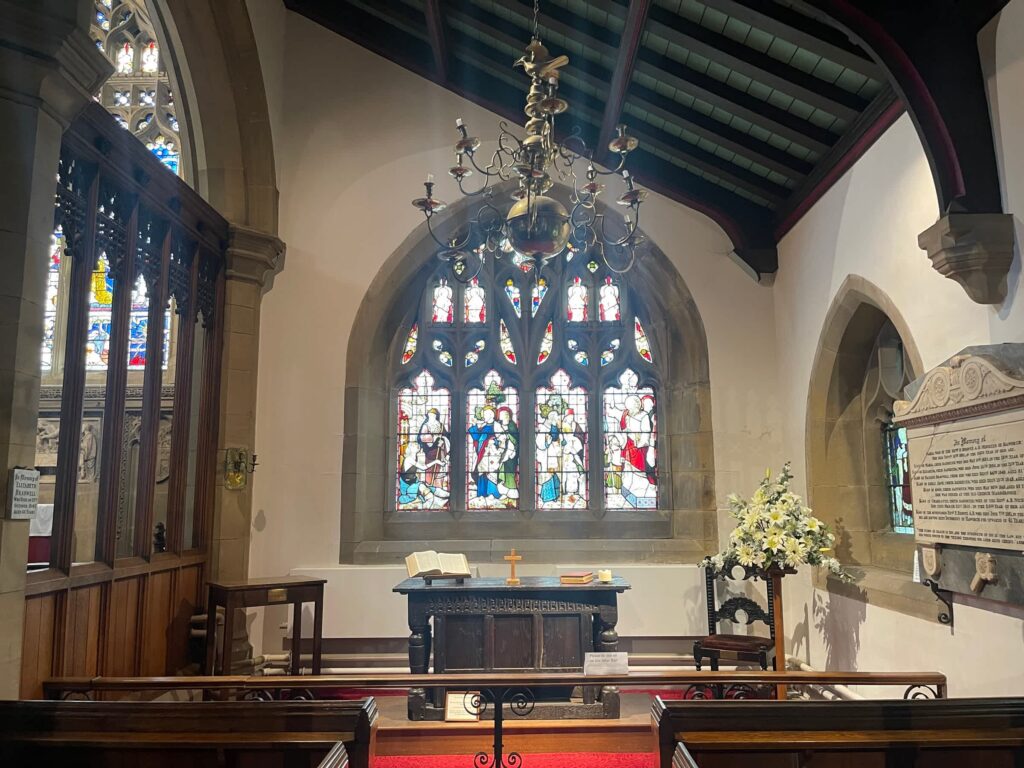
02/02/1909 – A note recorded that when Haworth Church was rebuilt in 1880, all bodies were removed from the interior except Mr Charnock and the Brontë family. Patrick lies near the chancel steps and the sisters under a large pillar on the right.
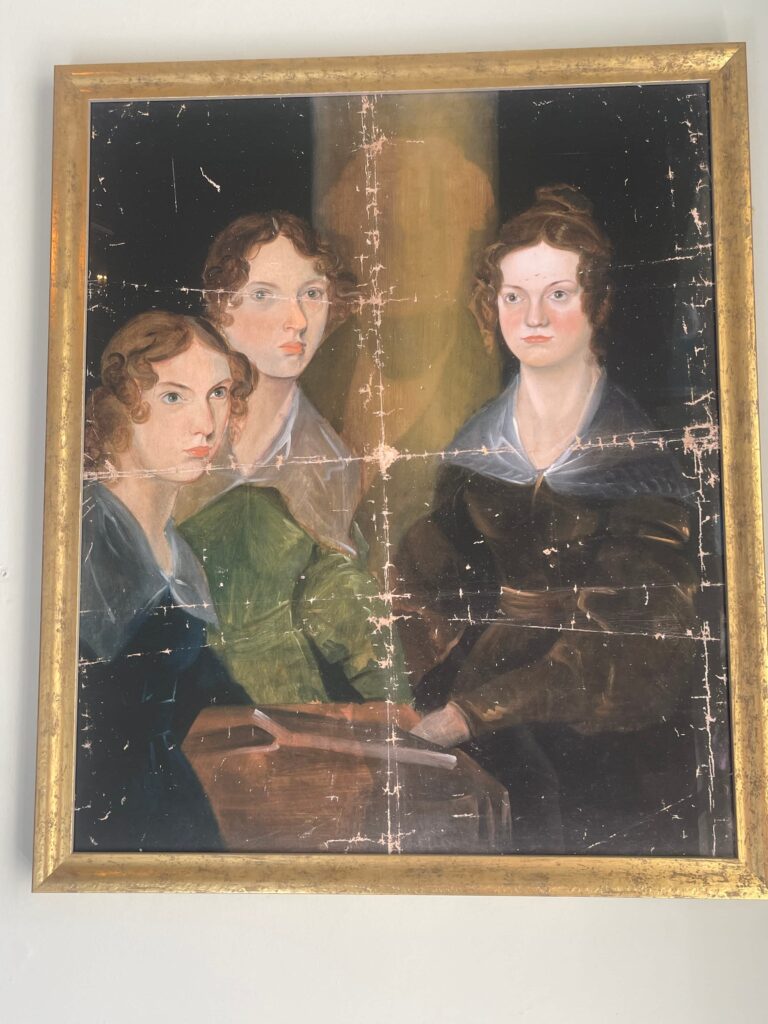
05/03/1914 – Branwell Brontë’s portrait of Charlotte, Emily and Anne was exhibited for the first time at the National Portrait Gallery. It had been thought lost and was found folded in a cupboard in Ireland.
04/08/1928 – The Parsonage at Haworth was officially handed over to the Brontë Society.
14/06/1929 – It was reported that John Rushworth, a retired cartwright of Denholme, was probably the only living school-fellow of the Brontë sisters as he approached his 96th year.
10/08/1929 – The manuscript of Charlotte Brontë’s “The Violet” was sold at Sotheby’s for £250.
24/04/1939 – James Roosevelt, the son of US President Franklin D. Roosevelt, visited the Parsonage.
Present Day
19/05/1989 – The Brontë bridge was destroyed by a flash flood. It was rebuilt in 1990.
23/07/1997 – Ann Cryer MP (Keighley 1997–2010) gave a speech in the House of Commons about the condition of Top Withens.

10/04/2013 – Charlotte Brontë’s poem “I’ve been wandering in the greenwoods”, dated 14 December 1829 and written when she was 13, sold at auction for £92,450.
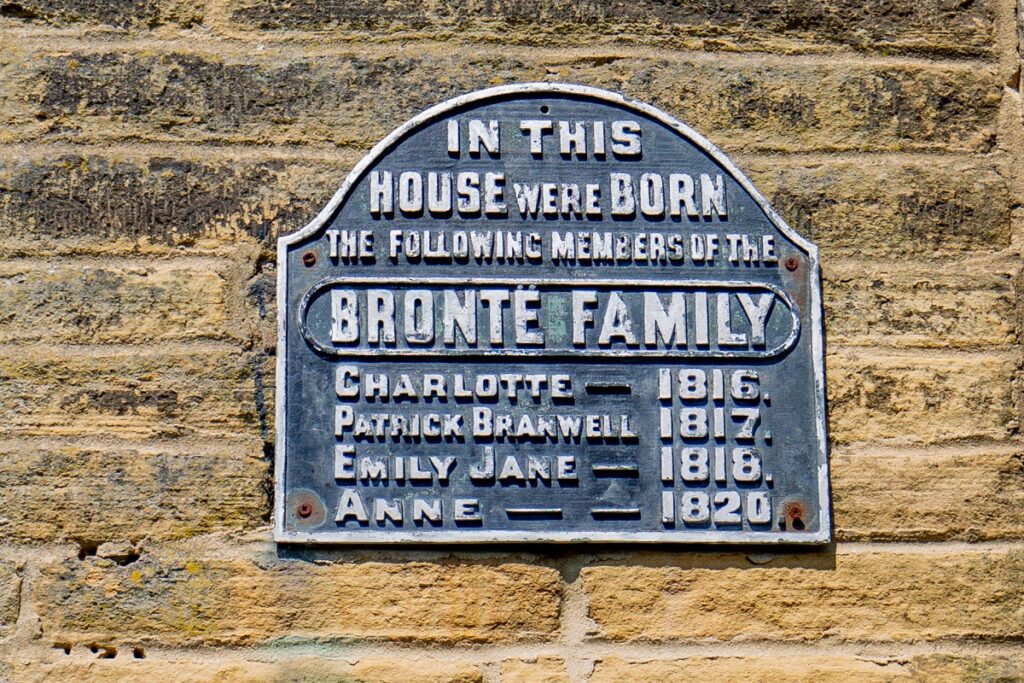
April 2024 – The terraced house in Thornton, Bradford, in which the Brontë siblings were born came under public ownership after a community group raised funds to secure it.
26/09/2024 – The Brontë memorial in Westminster Abbey was updated to include the missing diaereses (dots) in the surname ‘Brontë’ for Charlotte, Emily and Anne.
15/05/2025 – Queen Camilla opened the restored Brontë Birthplace in Thornton, now a museum with overnight accommodation.